Moringa to combat climate change
While most of us would like to think that we aren’t part of the problem, the fact remains that we all are contributing to the climate change in one way or another. But don’t give up yet. While we can’t give up our way of life, you as an individual can take action.

Moringa as a Climate Change Mitigation Strategy?
For hundreds of millions of people the threat of famine is connected to the change of the climate. The planting of trees, including the planting of the Moringa tree, can play one important role in mitigating the effects of climate change.
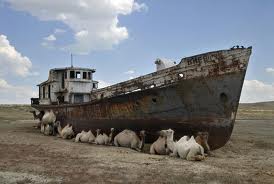
The effects of climate change are making droughts more of a norm than an exception. This is a pattern that places some of the most vulnerable communities in an increasingly precarious position when it comes to meeting basic food needs. By the time shortages and hunger reach “emergency” levels and warrant aid; families, communities, agricultural practices and lands will have suffered greatly.
The Moringa tree can play a role in the fight against desertification
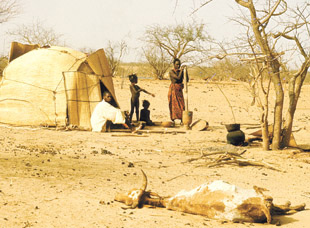
A big problem that is partly caused by climate change is desertification.
Because Moringa Trees grow fast and well in dry areas, it can play a role in the battle against desertification. The presence of long taproot makes Moringa resistant to periods of drought. Moringa can also grow in areas where strong winds and long dry spells occur simultaneously, causing serious soil erosion.
Importing vitamin pills or nutrition bars is not a long term solution for chronic food shortages or climate change mitigation.
To know which aid is really durable to combat food shortages and efficient for climate change mitigation, it is good to look at the potential that is already available in developing and third world countries. Moringa is a very simple and readily available solution.
For smallholder farmers in drylands, a failed harvest can mean months of malnutrition and hardship. “Conventional” crops are often not native and require expensive inputs, significant irrigation and land preparation in order to produce a successful harvest. This means that they are more vulnerable to droughts. Trees, on the other hand, often survive when other crops fail.
Study on Moringa’s Potentials for Climate Change Mitigation
“Climate-Smart” Agriculture and Moringa
Introduction
There has been a time in history when humans used tens of thousands of vegetables, cereals, etc but today we rely on just a few cereals. After roughly 10,000 years of progressive agricultural civilization, seventy percent of the world’s food supply comes from just three grains —- corn, wheat and rice—- and eighty percent of our plant-based food intake comes from just twelve plants—eight grains and four tubers (Nierenberg, 2011). Globalization, intensification and industrialization of agriculture, has been blamed for this trend where we concentrate on very small number of species in monoculture. Thus global agriculture is leaning too heavily on a few crops and need to plant a wider variety of crops to build a more resilient food system. The FAO reports that Crop agriculture is responsible for 14 percent of global greenhouse gas emissions. Therefore, new climate-smart policies aimed at improving both livelihoods of farmers, food security and access as well as reducing emissions of greenhouse gases are the need of the hour.
Climate change, Poverty and Sustainable livelihoods
Sub-Saharan Africa with a population of around 782 million people in 47 countries is home to 36 of the world’s poorest countries. Two-thirds of the estimated 33 million people suffering from AIDS live in sub-Saharan Africa; the region with the highest rates of malnutrition (Kennedy, 2011). Sub-Saharan Africa is the only major region in the world that has failed to progress in terms of food security with more or less stagnant levels of production per capita in recent years (Spore, 2011a). Climate change presents a new major concern, often interacting with or aggravating existing problems. Small scale farmers in West Africa are already producing far below potential (Spore, 2011b) and since poverty is a rural phenomenon in this region, it is only agriculture that holds the key to resolving the problem. As climate change takes firmer hold and the global population grows and market fluctuates, we need to find ways of resisting the shocks associated with it in order not to make an already fragile situation worse.
Tea, coffee and cocoa are the three major beverages in the world today. Cocoa was introduced into West Africa about one hundred years ago, and today it is a 56 billion Euro industry. In Ghana alone cocoa covers 1.8 million hectares. However “by the year 2080, cocoa, which is Ghana’s main export crop, may cease to grow in the country as a result of Climate changes” (George Gyan- Baffuor, et all, 2007). According to a study by researchers from the Kew Royal Botanic Gardens published in PLoS, the wild Arabica coffee plant, the parent of the bushes on coffee farms, could go extinct as soon as 2080. In China alone tea plantations cover a total of 1.7 million hectares (Shuangxu, 2011) and are the main income of 80 million farmers (Xiaojian 2011). It is needless to say that much of this vegetation and industry is at risk due to Climate change. The environmental impacts caused by human industry are compromising the sustainability of current economic activities, and degrading the natural life support systems, on which we and all other species depend. Climate change is expected to trigger severe consequences to smallholder poor farmers who dominate the agriculture sector in Africa. The impact of climate change are felt at the level of natural resource base upon which rural communities depend, at the farming system level and at the level of individual species (Vershot et al 2005). Farmers will therefore need to devise mechanisms and adaptation strategies to reduce the impacts of climate change.
Moringa’s Potentials and Climate Change
In an independent laboratory test, Moringa Oleifera scored the highest in antioxidant content. Moringa beat the record-holding acai berry by over a 50% margin, measured over 157,000 umoles using the Oxygen Radical Absorption Capacity (ORAC) system of measurement developed by the National Institute of Health’s National Institute for Aging (Prnewswire.com, 2012). The list of antioxidant superfoods used in the research are moringa, Acai berries, Blueberries, Dark chocolate, Garlic, Goji berries, Green tea, Pomegranates and Red wine. Moringa is naturally vegan, caffeine-free and gluten-free. The World Health Organization (WHO) and other international humanitarian relief organizations have used Moringa to combat malnutrition in many parts of the world.
The many medicinal, nutritional, industrial, and agricultural uses of moringa are well documented. Fahey (2005) said that “the nutritional properties of moringa are now so well known that there seems to be little doubt of the substantial health benefit to be realized by consumption of moringa leaf powder in situations where starvation is imminent.” The interest generated from the second international conference held in 2006 in Ghana on the uses of the moringa tree, has been so great that several national moringa associations have already been formed in African countries. Moringa is well adapted to most of sub-Saharan Africa, where the world’s worst rates of malnutrition and AIDS are found (Kennedy, 2011).
The speed with which moringa leaf powder is entering rural markets in Africa is heartening. In Ghana and West Africa, beehives of activities have evolved around moringa. These offer low cost locally available and sustainable solution to malnutrition (Kennedy, 2011) and AIDS support management. The moringa tree offers new opportunities to small scale farmers and contributes to the development of natural resources but will need strong policies, research and market development strategies in order to realize its full potential. The integration into food systems should be both lateral within Africa and vertical as product development, coupled with market development and penetration efforts, to facilitate the entry of moringa products into both the developed countries and emerging economy markets. All of this should be carried out in a way that serves the fundamental interests of all stakeholders, with the most important consideration given to the vulnerable, poor, rural communities wherein primary production occur. A dynamic new suite of bio-products can be produced from agro-forestry systems that will at the same time contribute to the restoration of badly degraded ecosystems and agricultural site productivity.
One practical step to compensate for the several unpreventable carbon dioxide emissions is to plant trees. This is because trees take carbon dioxide out of the atmosphere and they release oxygen in return. The type of trees planted will have a great influence on the environmental outcome. According to a Japanese study (Villafuerte, and Villafurte-Abonal, 2009) the rate of absorption or assimilation of carbon dioxide by the moringa tree is twenty times (20x) higher than that of general vegetation and fifty times (50x) higher when compared to the Japanese cedar tree. The moringa tree therefore will be a useful tool in the prevention of global warming in that, one (1) moringa tree will be equivalent to the effectiveness of fifty (50) Japanese cedar tree in absorbing carbon dioxide (Villafuerte, and Villafurte-Abonal 2009). For example, If we expanded moringa from one hundred thousand (100,000) hectares worldwide to one million (1,000,000) hectares, that would equate to five (5) gigatonnes of CO2e being sequestered. Studying how the demand for other superfoods took their rightful positions in the world market would help us to develop policies and programs to greatly drive demand for moringa products in all markets.
Moringa seeds contain between 30-40% oil, with 13% saturate fats and 82% unsaturated fatty acids. About 65-73% of moringa oil is oleic acid with olive and sunflower oils having 75% and 40% respectively. Just like olive oil, moringa oil contains 1-2% of beneficial essential fatty acids such as omega 3 and omega 6 (Villafuerte, and Villafurte-Abonal 2009). The oil can be used for cooking, as a lubricant in fine machinery and as fuel lamps and in the manufacture of soaps, perfume and hair care products. The seeds and seed cake of Moringa oleifera are recognized as an effective primary coagulant in water treatment as they have the capacity to remove up to 99% of bacteria from water (Foidl, et al., 2001, Villafuerte, and Villafurte-Abonal 2009).
Fresh moringa leaves can be cooked and eaten as vegetables or processed into tea, powder and other pharmaceutical preparations. Moringa leaves, shoots and seeds can be used as green teas, animal feed with tremendous results. A juice can be extracted from the fresh leaves which can be used as a growth hormone that can increase yields of crop by 25-35% (Foidl, et al., 2001).
Moringa is thus a multipurpose plant that is difficult to overlook in today’s battle with the climate. It is fast growing and well adapted to growing in adverse conditions where many plants would not be able to requiring at least 400mm of rain per annum. It presents itself as an easy plant for agri-business, poverty mitigation and a climate smart choice of plant to be developed for the benefit of present and future generations.
References:
1. Fahey, W. J., (2005) trees for life Journal –Moringa oleifera:- A Review of the Medical Evidence for its Nutritional, Therapeutic, and Prophylactic Properties. Part 1 hppt//www.tfljournal.org/article.php/20051201124931586
2. Foidl, N., Harinder P. S., Markar and Klaus Becker (2001). The potential of Moringa oleifera for agricultural and Industrial uses. In: The Miracle Tree Edited by Lowell J. Fuglie, Darkar, Senegal pp 45-76
3. George Gyan- Baffuor, et all, 2007, HDR Report 2007/2008 as reported in Daily Graphic (Report Paints Gloomy Picture for Cocoa), Friday November 30, 2007, Pg 31
4. Kennedy, D., 2011,. 21st Century Greens, Published by leaf for Life, 260 Radford Hollow Rd. Berea, KY 40403 USA, Pg 2004-2005.
5. Nierenberg, D. (2011) Innovations that Ensure Food Security, China Daily, Friday May 2011, Pg 9
6. Nutraingredients-usa.com (2012) Moringa oleifera trumps superfruit rivals in ORAC tests. [online] Available at: http://www.nutraingredients-usa.com/Consumer-Trends/Moringa-oleifera-trumps-superfruit-rivals-in-ORAC-tests [Accessed: 17 Sep 2012].
7. Prnewswire.com (2012) New Study Shows Moringa Oleifera Scores Highest Antioxidant Content in Food — NEWTOWN, CT, June 28, 2012 /PRNewswire-iReach/ –. [online] Available at: http://www.prnewswire.com/news-releases/new-study-shows-moringa-oleifera-scores-highest-antioxidant-content-in-food-160666225.html [Accessed: 17 Sep 2012].
8. Vershot LV, Mackensen J, Kaadji S, Noordwijik M, Tomich T, Ong C, Albrencht A, Bantilan C, Anupama KV, Palm C. (2005) Opportunities for linking adaptation and mitigation in Agroforestry systems. Hppt://www.worldagroforestruy.org/downloads/publications/PDF/BCO4241.pdf. Access 1 March 2010.
9. Villafuerte, L. R. and Villafurte-Abonal L., (2009) Data Taken from the Forestry agency of Japan in Moringa Malunggay Phillippines, Apples of Gold Publishing, Singapore, Pg 240.
10. Shuangxu, Yang (2011) Developing Principles of Chinese Tea in Training Course on Pollution-Free Tea Production, Tenfu Tea college from may 11th 2011 to July 5th 2011, Zhangzhou, China. Pg 145.
11. Spore, (2011a). Room for Improvement, No 154 August-September, The magazine for Agricultural and Rural Development in ACP Countries Pg 22 hppt//spore.cta.int
12. Spore, (2011b). A Bitter Taste, No 154 August-September, The magazine for Agricultural and Rural Development in ACP Countries Pg 22 hppt//spore.cta.int
13. Xiaojian Chen (2011) Shuangxu, Yang (2011) Analysis of Tea Consumption Pattern in Training Course on Pollution-Free Tea Production, Tenfu Tea college from may 11th 2011 to July 5th 2011, Zhangzhou, China. Pg 252, 254.
Newton K Amaglo, PhD Student, Hunan Agriculture University, Faculty of Food Science and Technology, Changsha, Hunan. China 410128.
Email: amaglonewton@yahoo.com Nov 2012