Please enable javascript, or click here to visit my ecommerce web site powered by Shopify.
moringa
Start a Hangout

The ownership of one Moringa tree can make an enormous difference to a family’s livelihoodmoringa

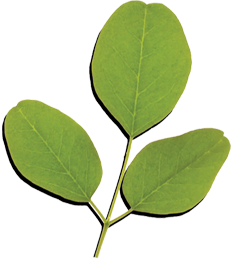
Moringa Fresh leavesmoringa

Moringa - A Supermarket On A Tree!

Imagine a tree in your backyard that will meet most of your nutritional needs, purify your water and take care of you medicinally? Moringa cures illnesses, purify water, it's efficient against malnutrition and can feed the hungry.

Moringa oleifera leaf powdermoringa

MORINGA TREE SYMBOLS - FREE TO USE (please make link reference to our domain)

FIND HOW TO USE MORINGA HERE

WHY MORINGA IS CALLED MOTHER'S BEST FRIEND? HERE

INSTRUCTIONS TO MAKE MORINGA POWDER HERE

HOW / WHY GROW MORINGA TREES IN CITIES, URBAN AREAS? HERE

MORINGA - FOR A CLIMATE CHANGE MITIGATION STRATEGY HERE

Moringa Oleifera Tree Documentary 1

Moringa Oleifera Tree Documentary 2

Moringa Medicine - Mother's Best Friend

moringa Moringa Tree - Howto Documents - Research - Studies - Facts moringa

“Without Moringa There Is No Life”

Goes the saying of the Konso people who inhabit the lowlands of southern Ethiopia, expressing the ancient link that unites them to the Moringa oleifera tree.

WARNING: Beware of Moringa tree bad cultivation or manufacturing practices

STOP and think about what you put in your body. Where and how are the Moringa tree products manufactured?

As more and more people become aware of the Moringa tree and its benefits the flow of products onto the market is skyrocketing. The market place has plenty low quality manufactures attempting to capitalize on unsuspecting and uneducated consumers.

A large amount of the Moringa oleifera supplements(Moringa powder, Moringa capsules, Moringa tea...) on the market are made from cheap Moringa with lack of product quality control. While these supplements may be affordable, they may not be as the label says. Moringa nutrients could easily be lost in the manufacturing process and delivery. Remember the point of buying Moringa oleifera is the incredible amount of nutrients it contains, not just to have green powerless powder compressed into capsules with a nice name on it.

Before You Buy Moringa Supplements

- Make sure that it contains only 100% Moringa and no fillers or additives.

- Verify that it comes in a vegetarian or vegan capsule.

- Make sure you do your due diligence on the manufacturer and where they source their moringa from.

- Make sure that your Moringa supplement comes from FRESH LEAVES - The longer leaves sit after being picked, the more nutrients that are lost in the process. The same counts for how long is the Moringa powder sitting in a warehouse or the Moringa capsules in the shop shelfs. The fresher the Moringa products are (powder, capsules...) the better. Loss of up to 50% of vitamins can be reached after six months of storage.

- Identify what process is used to dry the Moringa leaves. Many farmers, producers of Moringa powder dont care how they dry the leaves. They use the sun to be quicly over with the process. The sun destroy more ingredients than when the leaves are dryed in the shadow. See study on effect of dehydration on the nutritive value of Moringa leaves Sun dried - VS - Shadow dried - VS - Oven dried

After Buying Moringa Supplements

Moringa leaf supplements should be stored in air-tight containers protected from heat, humidity and light. Moringa trees may like lots of sun but the sunlight is not good for the moringa powder, capsules...

Moringa Tea - You're throwing away the best of moringa into the garbage bin. To get the nutrition from Moringa, you must eat or drink the leaf  powder. Tea bags only gives you the flavor of Moringa, none or very little of Moringa nutrients. You got Moringa tea bags? No problemu, cut it open and make your tea with the Moringa powder.

How to Use Moringa

The Moringa oleifera was featured on the popular talk show ABC "The View" as a "Slim Down Super Food" due to its incredible energy boosting, nutrient dense, weight loss and antioxidant properties, without side effects.

The Moringa oleifera tree leaf is a nutritionally rich, ecological and economical vegetable available in practically all tropical countries. It is therefore essential to develop the production and consumption of this "green superfood". Processed or fresh, the moringa oleifera leaf is not only a new, promising source of income and employment, but also an outstanding, nutritionally rich vegetable for families and markets.

Moringa tree grows quickly and is easy to cultivate. The Moringa leaf, fresh or processed into dried powder, can be used as an every-day food item in a multitude of ways: in ready-made meals, juices, breads, pasta, fritters, condiments, instant soups… This food can be used in households, school cafeterias, dispensaries, maternity wards, nutrition rehabilitation centres, as well as in restaurants and supermarkets.

1. Nutritional content of fresh Moringa oleifera tree leaves

Moringa oleifera tree leaves belong to the family of dark green leafy vegetables, a food group particularly rich in nutrients. In particular, the leaves are a good source of proteins, calcium, iron, ß-carotene (converted to vitamin A in the human body), vitamin C and vitamin E. In addition, Moringa leaves have a high dry matter content (around 20-25%) compared to most other plant food sources (generally around 10%). This makes it even more beneficial as a fresh vegetable since 100 grams of fresh leaves will bring twice as much nutritive material as 100 grams of most other vegetables.

Eating 100 grams fresh Moringa oleifera tree leaves provides you with as much protein as an egg, as much calcium as a big glass of milk, as much iron as a 200 grams beef steak, as much vitamin A as a carrot and as much vitamin C as an orange.

Indeed, 100 grams fresh Moringa oleifera leaves are enough to cover:

• 30 to 100% of the daily recommended intake of calcium (30 to 50% for teenagers, 40 to 60% for adults, children and pregnant and breastfeeding women, 80 to 100% for young children below 3 years old)
• 25 to 80% of the daily recommended intake of iron (25% for pregnant women, 40-60% for teenagers and women, 50 to 100% for men and children).
As for vitamins, the recommended daily intake for vitamin A varies from 400 μg retinol equivalents (young children) to 1,000 μg retinol equivalents (breastfeeding women). Therefore, 100 grams of fresh Moringa tree leaves could theoretically cover 100% of daily needs, but this is highly variable depending on storage conditions and how they are eaten, as vitamin A degrades over time and when exposed to light or heat. Similarly, 100 grams of fresh Moringa leaves could cover 100% of the vitamin C requirements, for which the recommended daily intake varies from 60 mg (young children) to 130 mg (breastfeeding women), but this vitamin degrades quickly with time and during cooking.
For optimal nutrient retention, it is advised to consume fresh Moringa tree leaves shortly after harvesting and to cook the leaves for a short time (a few minutes only), or even to eat them raw if they are young and tender

10 grams of Moringa leaf powder per day cover:

Calcium
• About 30% of the recommended daily intake for children between 1 and 3 years old.
• About 25% of the recommended daily intake for children between 4 and 9 years old as well as adult women.
• About 15% of the recommended daily intake for teenagers and women over 55.
Iron
• About 30% of the recommended daily intake for children between 1 and 12 years old.
• About 15% of the daily recommended intake for teenagers.
• About 20% of the daily recommended intake for adults over 55.
• About 12% of the recommended daily intake for adult women.
• About 7% of the recommended daily intake for pregnant women.
Vitamin A
• 50 to 100% of the recommended daily intake for all population categories.

Moringa oleifera leaf powder can be used somewhat like dried spirulina, a nutritionally rich, green seaweed, often used as a dietary supplement.

2. Nutritional content of dry Moringa oleifera tree leaf powder

Another way of consuming Moringa leaves is to dry them and reduce them into powder, making it easier to store and use at any time. To ensure the good nutritional and microbiological quality of the leaf powder, its water content has to be lower than 7%, the drying time should be as short as possible and the drying temperature not too high (no more than 50-55°C).
Even if a large amount of the vitamins are lost during drying and storage, the leaf powder still constitutes a very rich nutritional supplement, since it is a concentrate of the Moringa oleifera leaves

Moringa tree leaf powder can be stored for some time before it is consumed. If so, the leaf powder has to be stored in a water- air- and light-proof container to preserve as much vitamins as possible and avoid microbial contamination. In storage, the protein and mineral contents will be preserved for up to six months, whereas a loss of up to 50% of vitamins can be reached after six months of storage.
Once the container is opened, the leaf powder should be consumed quickly (within one week) since its water content will increase and it will be exposed to microbial contamination. For this reason, it is advised to package Moringa leaf powder in rather small containers.

3. Nutritional content of cooked Moringa oleifera leaves

Fresh Moringa leaves can be eaten raw, if they are very young and tender, but usually they are cooked. Even if cooking the leaves destroys a part of their nutrients, notably vitamins, others become easier to assimilate. For this reason, it is important to consider various ways of cooking the leaves and to understand how to preserve the maximum amount of nutrients. This can be achieved by associating Moringa oleifera tree leaves with other ingredients that enhance the availability of nutrients, by cooking the leaves only for a short time, or by keeping the liquid (water, sauce) in which the Moringa leaves are cooked. Using Moringa leaf powder is also a way of preserving nutrients (although some have been lost during drying and storage), as the powder can be added to food after cooking.

Moringa oleifera- Vitamin C
A study from Sri Lanka showed that on average, leafy vegetables lose 32% of their vitamin C content when they are boiled for five minutes, and 54% in ten minutes. Steaming is less damaging, with 15% loss in five minutes and 39% loss in ten minutes. Cooking Moringa oleifera tree leaves or Moringa oleifera tree leaf powder the least possible time is thus a good way to preserve the vitamin C content.
Moringa oleifera - Beta-carotene
The World Vegetable Centre (AVRDC, Taiwan) showed that the retention of total carotene and beta-carotene of Moringa oleifera tree leaves was enhanced by adding oil to the leaves during pressure cooking (76-99% of retention with oil against 46-63% without).
Moringa oleifera - Iron
The bioavailability of nutrients is the ability they have to be digested and used by the human body. The bioavailability of the iron provided by plants is lower than when provided by meat. A good way to improve the availability of iron to the body is to add vitamin C to the dish. This can be done by using lemon juice, lemon peel or fresh tomatoes.
AVRDC demonstrated that boiling Moringa tree leaves in water enhanced the in vitro iron bioavailability of fresh leaves and leaves dried powder by 3.5 and 3 times, respectively. In addition, boiling the leaves in water enhanced aqueous antioxidant activity. This shows that cooking Moringa tree leaves does not necessarily have a negative impact on nutrient intake. The heat destroys some of the vitamin C, but improves the assimilation of iron. The best option is to vary consumption modes.

4. Water soluble and fat soluble vitamins

Vitamin C and all the B vitamins contained in the Moringa oleifera tree leaf are water-soluble. Other vitamins are soluble in fat: such is the case of vitamin A (ß-carotene) and E (a-tocopherol). When cooking fresh or dried leaves, the cooking water should be kept to benefit from the vitamins B and C, soluble in water. In addition, to render the fat-soluble vitamins A and E available, it is suggested that the leaves be cooked using oil or other sources of fat. Ideally, the Moringa leaves should be quickly boiled in a small quantity of water. Add both Moringa oleifera tree leaves and the cooking water to a sauce containing a source of fat. This way both water-soluble and fat-soluble vitamins, only slightly diminished by cooking, are made available.

THE MORINGA OLEIFERA SYMBOLS - Free To Use!

Please make a link reference to our domain http://miracletrees.org

Thanks!

moringa oleifera tree

moringa Become Ambassador of the Moringa tree - Spread the Moringa seeds! moringa


Back to Top - Miracle Trees Foundation

Partners - Hauswachter Berlin, Servatrix, Silent Disco, Silent Disco Germany